Packaging Strategy for Morel Mushrooms
Project Overview
A morel mushroom seller needed a packaging system developed for small-parcel distribution.
The product already included a manufacturer-supplied inner bag that provided the necessary moisture and oxygen barrier properties. Because that component was already appropriate for the product, it was retained rather than redesigned.
The project therefore focused on developing the rest of the packaging system around that primary package, including the shipping container, void fill, moisture-control components, sealing method, shipping labels, and overall launch strategy.
Because there was no historical shipping data or established secondary packaging system, the objective was not to correct a known packaging failure. Instead, the project focused on creating a practical launch solution that could protect a fragile product while keeping initial packaging costs low.
Rather than immediately investing in custom packaging, the project evaluated multiple stock packaging options across different levels of cost, presentation, protection, and scalability.
Product Characteristics
Fresh morel mushrooms
Naturally fragile product
Susceptible to crushing and compression
Vulnerable to movement during shipment
Sensitive to environmental exposure
Packaged in an existing manufacturer-supplied barrier bag
Inner bag provides necessary moisture and oxygen resistance
Desiccant included to support moisture control and help keep the product dry
Intended for small-parcel distribution
Multiple customer order quantities anticipated
Packaging configurations considered for one-pack, two-pack, and three-pack orders
The Challenge
The packaging needed to balance several competing priorities:
Product Protection
Morel mushrooms are fragile and can be damaged by movement, compression, impacts, and repeated handling during small-parcel distribution.
Environmental Protection
The mushrooms required protection from moisture and environmental exposure. The existing manufacturer-supplied bag already provided the necessary moisture and oxygen barrier properties, so replacing that component would have added cost without solving an identified problem.
A desiccant was also incorporated to help control moisture inside the package and keep the morels dry.
Product Restraint
Open space inside the shipping container needed to be controlled so the mushrooms would not move excessively during transit.
Package Closure
The inner bag needed a simple and repeatable closure method. An adhesive seal was used to close the bag without introducing unnecessary equipment or additional packaging complexity.
Launch Economics
The business did not yet have enough sales history to know which order quantities customers would prefer. Investing heavily in custom packaging, commercial label printing, or specialized equipment before understanding actual demand would create unnecessary financial risk.
Scalability
The initial packaging needed to support a low-volume launch while allowing the packaging system to evolve once real sales and shipping data became available.
Engineering Approach
Multiple packaging configurations were considered across premium and value-focused options.
Each concept was considered against:
Product protection
Product movement
Moisture control
Existing barrier-package performance
Small-parcel distribution risk
Packaging cost
Packaging presentation
Ease of sourcing
Minimum-order quantities
Ease of packing
Closure method
Labeling requirements
Multiple order quantities
Scalability as demand increased
One important engineering decision was determining which parts of the existing system did not need to change.
The manufacturer-supplied bag already provided the required moisture and oxygen resistance, so it was retained. The focus was placed on developing an economical secondary shipping system around it.
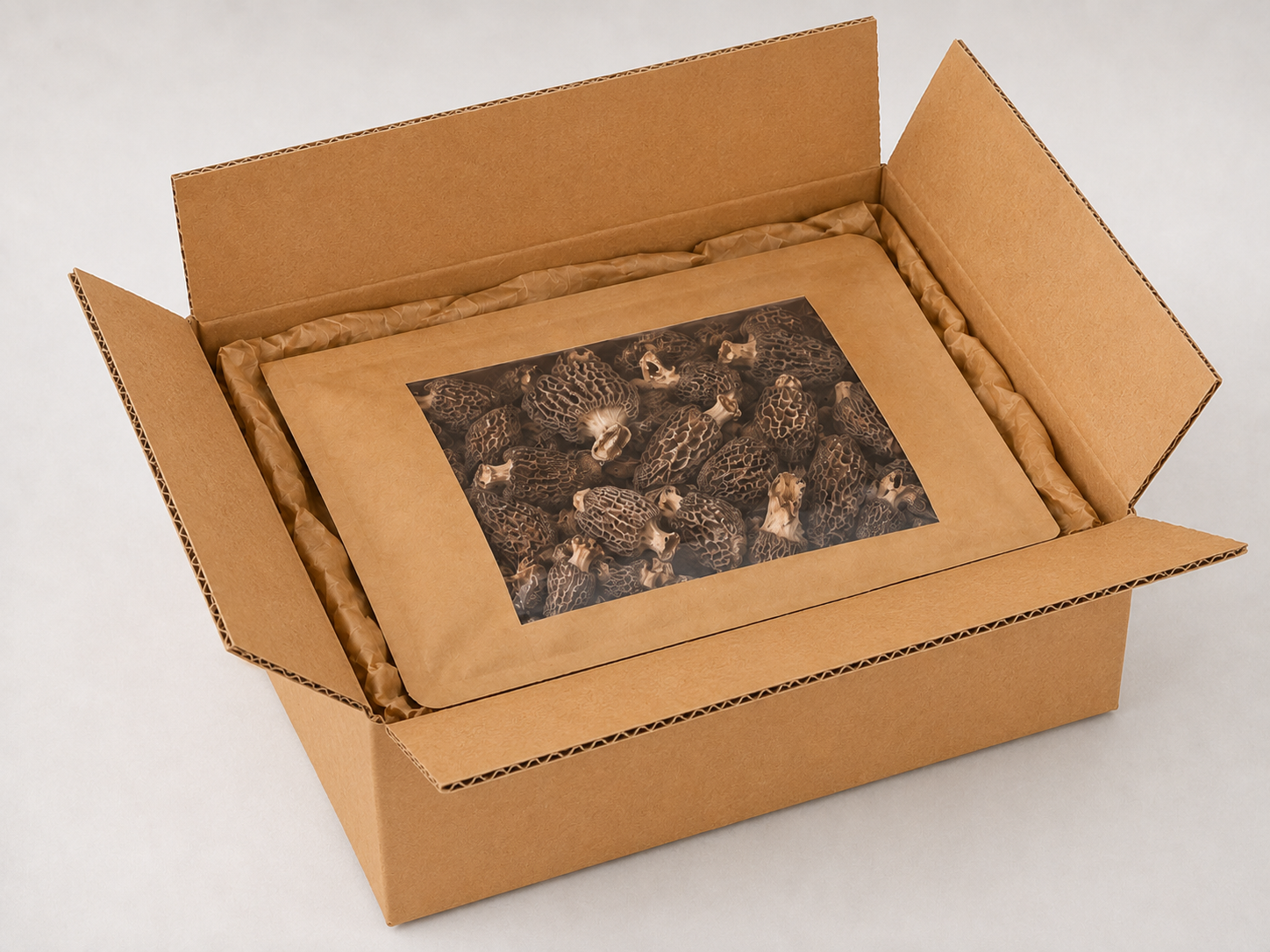
Kraft paper was recommended as dunnage and void fill regardless of which outer package was selected.
Concept 1 — Premium Packaging System
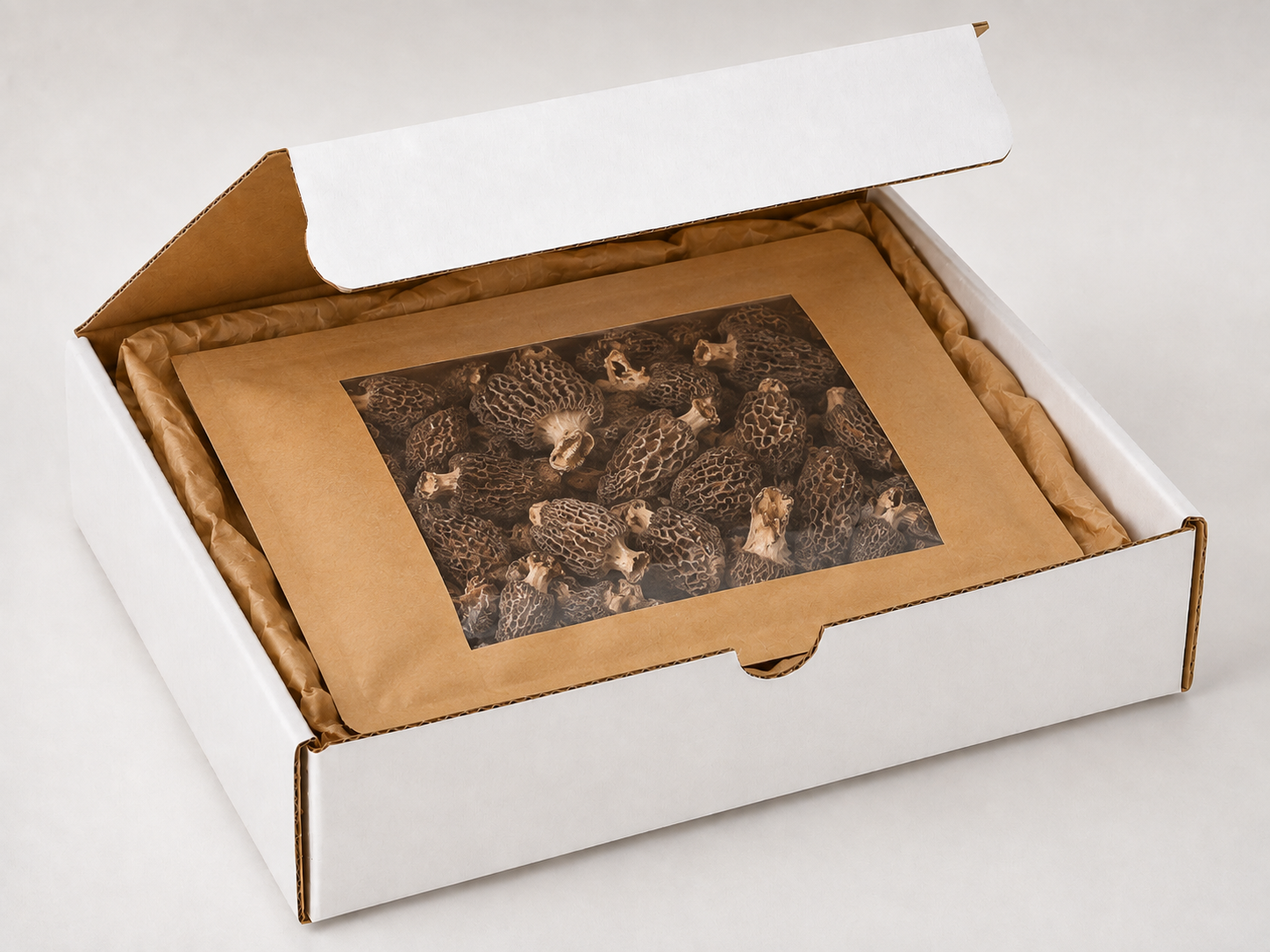
The premium approach used white literature-style mailers sized around different customer order quantities.
One-Pack Option
9" × 6 1/2" × 1 3/4" white literature mailer
Two-Pack Option
9" × 6 1/2" × 4" white literature mailer
Three-Pack Option
9" × 6 1/2" × 6" white literature mailer
Advantages
More polished customer presentation
Stock packaging with no custom tooling required
Multiple sizes available for different order quantities
More refined appearance than standard brown corrugated boxes
Relatively easy to source in small quantities
Compatible with the existing manufacturer-supplied inner bag
Tradeoffs
Higher packaging cost than basic corrugated boxes
Additional packaging expense before demand has been validated
Customer order patterns were not yet known
Risk of investing in packaging sizes that may not match future sales behavior
Best suited for: A more established product where presentation becomes more important and order quantities are better understood.
Concept 2 — Entry-Level Corrugated System
The lower-cost approach used standard 200-test corrugated shipping boxes with kraft paper added as void fill.
One-Pack Option
9" × 7" × 3" corrugated box
Two-Pack Option
9" × 7" × 4" corrugated box
Three-Pack Option
9" × 7" × 5" corrugated box
Advantages
Lower initial packaging cost
Readily available stock packaging
Easy to purchase in relatively small quantities
Simple pack-out process
Allows the business to begin shipping quickly
Preserves capital for other areas of the business
Works with the existing inner barrier bag
Provides a practical way to gather real customer-order data
Tradeoffs
Less premium presentation
Packaging is functional rather than highly branded
May not represent the final optimized packaging system
Future redesign may be needed once demand becomes clearer
Best suited for: Early-stage product launch and demand validation.
Supporting Packaging Materials
The packaging system was built around several simple, readily available components.
Existing Inner Bag
The manufacturer-supplied bag was retained because it already provided the necessary moisture and oxygen resistance for the product.
Rather than redesigning a component that was already performing an important function, the engineering effort focused on the areas where additional protection and structure were needed.
Desiccant
A desiccant packet was included to provide additional moisture control and help keep the morels dry inside the sealed package.
Bag Closure
The inner bag was closed using an adhesive seal.
This provided a simple closure method without requiring heat-sealing equipment or additional capital investment during the early launch stage.
Kraft Paper
Kraft paper was recommended as dunnage to control open space and reduce movement inside the shipping container.
Shipping-Box Closure
Standard packaging tape was considered sufficient for the initial launch.
There was no need to invest in specialized tape or automated sealing equipment while shipment volume remained low.
Product Labels
Product labels were printed using a small at-home printer rather than being purchased from a commercial label supplier.
This allowed the customer to produce labels in small quantities, make changes easily, and avoid committing to professionally printed label inventory before the product and branding were fully validated.
Shipping Labels
Shipping labels could also be printed using existing home-office equipment rather than requiring immediate investment in a dedicated thermal label printer.
The overall strategy was intentionally simple: use equipment already available whenever it could perform the required function adequately.
Recommendation
The recommended launch strategy was to begin with the least expensive one-pack corrugated configuration rather than immediately investing in premium packaging.
The recommended starting package was:
9" × 7" × 3" corrugated box
The complete initial packaging system consisted of:
Manufacturer-supplied barrier bag
Morel mushrooms
Desiccant for additional moisture control
Adhesive bag closure
At-home printed product label
Stock corrugated shipping box
Kraft-paper void fill
Standard packaging tape
At-home printed shipping label
The primary reason for this recommendation was uncertainty around customer demand.
At launch, the business did not yet know how many customers would purchase one pack, two packs, or three packs. Designing or investing heavily in a packaging system before understanding those buying patterns would mean making long-term packaging decisions with very little data.
The recommended strategy was therefore:
Launch: Low-cost stock corrugated packaging
↓
Collect Data: Monitor one-pack, two-pack, and three-pack demand
↓
Evaluate Performance: Track damage, product condition, customer feedback, packing efficiency, and shipping performance
↓
Optimize: Develop packaging around actual customer-order behavior
↓
Scale: Invest in more refined packaging, labeling, and equipment when volume justifies it
This approach allows the business to spend less on packaging during its earliest stage while gathering the information needed to make better packaging decisions later.
It also avoids replacing components that are already performing adequately. The manufacturer-supplied barrier bag remained part of the system because there was no engineering justification for changing it.
Validation Strategy
Because this was a new packaging application, there was no historical damage rate or established secondary package to benchmark against.
The proposed system was considered capable of supporting an initial launch based on experience with similar fragile products and the expected hazards of small-parcel distribution.
The first phase of validation would come from actual market shipments.
Key metrics to monitor would include:
Shipping damage
Crushing or compression damage
Product movement
Product dryness and condition upon arrival
Inner-bag performance
Seal performance
Customer complaints
Customer feedback
One-pack versus multi-pack order quantities
Packaging consumption
Packing time
Shipping cost
Packaging cost per order
The goal of the initial package was not to create the final packaging system.
It was to establish a functional starting point that could generate the data needed for the next packaging decision.
Engineering Takeaway
Shipping a fragile product through a small-parcel environment is difficult because the package must account for impacts, compression, repeated handling, vibration, uncontrolled package orientation, and environmental exposure.
However, packaging development does not always mean redesigning every component in the system.
In this project, the existing manufacturer-supplied bag already provided the required moisture and oxygen barrier properties. Retaining that component avoided unnecessary development and allowed attention to be focused on the areas that actually required engineering work: physical protection, product restraint, secondary packaging, moisture control, closure, labeling, and launch economics.
The project also demonstrated that the strongest or most polished package is not automatically the best solution.
For an early-stage business, it can make more sense to use stock corrugated boxes, simple adhesive closures, home-printed labels, standard tape, and other readily available materials while demand is being established.
The objective was not to create the final package on day one.
It was to create the right packaging system for the current stage of the business, retain the components that were already working, and build the data needed to make better packaging decisions as the company grows.