
Designing the Perfect Protein Powder Sampler Pack (All Because My Girlfriend Wanted a Taste)
The idea for this concept started in the most ordinary way: a conversation with my girlfriend.
She was talking about a specific protein powder brand she’d been eyeing. The flavors sounded amazing, the branding was on point, and the reviews were solid. But she had one big hesitation:
“I don’t want to buy a whole tub without knowing if I’ll even like the flavor.”
And that’s the problem in a nutshell.
For a lot of consumers, protein powder isn’t cheap. Committing to a full-size bag or tub for a flavor they might hate is a big ask. For brands, that hesitation means lost sales, abandoned carts, and slower adoption of new flavors.
So the question became:
How could a protein brand let customers taste their product with less risk, while still looking professional, on-brand, and scalable?
The answer: better sampler packaging.
Why Protein Sampler Packs Matter
Before we get into the packaging options, it’s worth spelling out why sampler packs are such a smart idea for protein brands:
Lower commitment = higher conversion
A $5–$15 sampler is a much easier “yes” than a $40+ full-size product.Great for flavor-forward brands
If your brand’s differentiation is unique flavors (cereal-inspired, dessert-based, seasonal, etc.), sampling is your best friend.Perfect for email flows and subscription offers
You can bundle samplers into welcome offers, subscription onboarding, or retention campaigns (“try these new flavors with your next order”).Reduced returns and complaints
When customers know what they’re getting, they’re less likely to be disappointed or try to send product back.
With that in mind, I started sketching two packaging concepts that would let customers try multiple flavors in a smaller, more approachable format.
Design Goals for a Protein Sampler Kit
Any sampler pack we design needs to hit a few key criteria:
Single-serve portions
Good product protection
Strong branding
Reasonable cost and manufacturability
Easy to ship
With those goals in mind, here are two concrete packaging concepts.
Option 1: Classic Protein Sampler – Foil Pouch Carton
This is the straightforward, workhorse approach: single-serve foil pouches inside a printed carton.
Structure
Inner packs:
Individual single-serve foil pouches
Standard tear notch at the top
Not resealable (no need — it’s one serving)
Each pouch is printed or labeled with flavor, branding, and required info
Outer carton:
Made from CCNB (Clay Coated News Back) or similar paperboard
Only the outside needs to be printed
Opens from the top
Holds 5–8 pouches to create a complete flavor kit
Can be designed as either a simple tuck-top or a more premium crash-lock bottom for heavier contents
Why this works
Pros:
Familiar & trusted format
Customers already know what to do with a foil pouch: tear, pour, mix, drink.Manufacturing-friendly
Many co-packers already run single-serve foil pouches for supplements, pre-workout, and protein. That keeps tooling and setup costs lower.Highly brandable
You get two main canvases: the outer carton and each pouch. The carton can tell the brand story; the pouches can focus on flavor and function.Flexible kit sizes
Want a “Top 5 Flavors” kit? A “Build-Your-Own 8-Pack”? Both are easy to execute with this structure.
Things to watch:
More pieces to manage
You’re dealing with multiple printed items (pouch film + carton), which adds some complexity to inventory and SKUs.Perceived value
This format can feel more “utilitarian” than “giftable” unless you really elevate the carton design.
This option is ideal if you want something fast, practical, and scalable that can be sold online, shipped easily, or stocked on shelves without needing a total rethink of your operations.
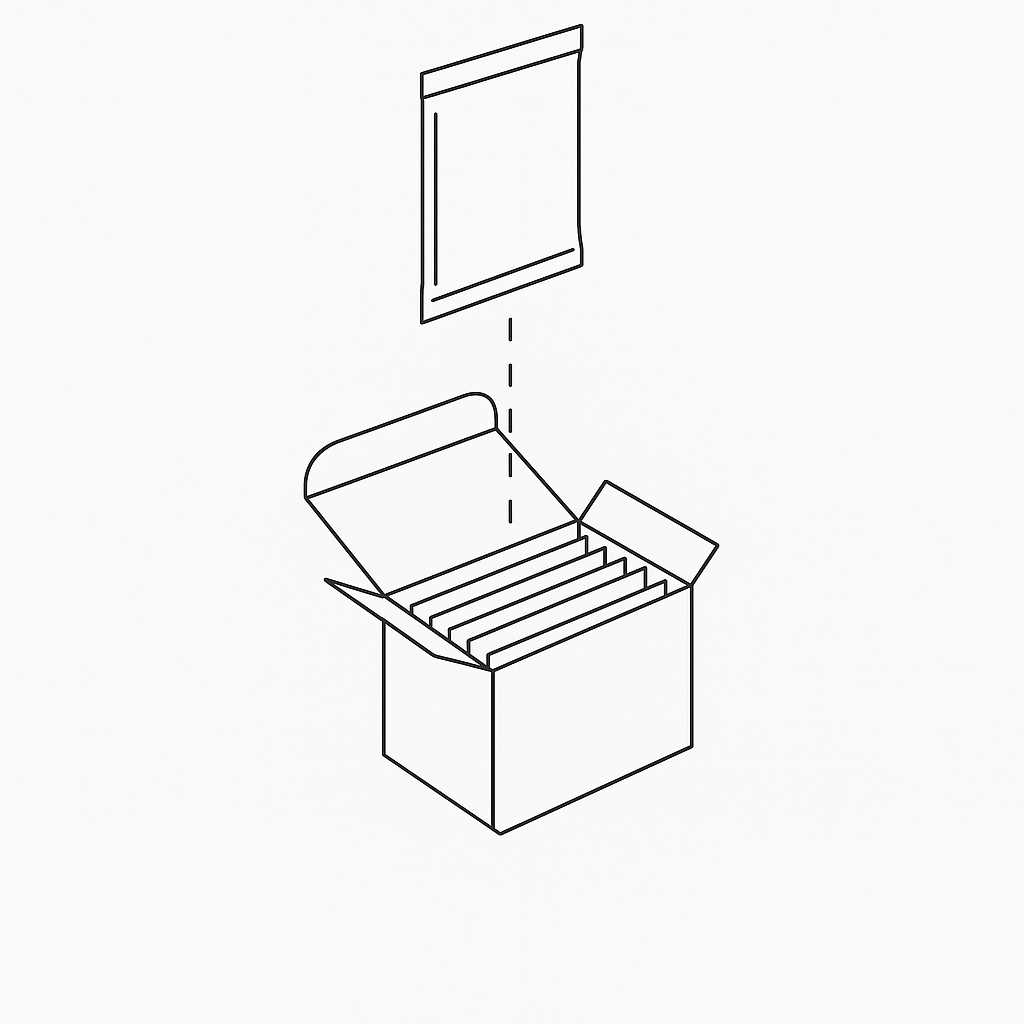
Proof of concept
Option 2: “Queen Anne–Style” Premium Cup Kit
The second concept leans into a more elevated, gift-box experience, inspired by those Queen Anne chocolate boxes and similar seasonal confectionery packaging.
Imagine opening a box to find neatly arranged little cups or trays, each one holding a different flavor of protein powder — it feels like a tasting flight.
Structure
Inner packs:
5–8 individual cups or trays, similar to:
A Keurig-style cup (small rigid cup with a sealed lid), or
A Smucker’s single-serve tray (shallow plastic cup with a peel-off lid)
The lid is most likely foil-based for strong sealing and high-quality printing
Each cup contains a single serving of protein powder
Insert:
A corrugate or paperboard insert inside the carton
Die-cut cavities hold each cup in place so nothing rattles around in transit
This also creates a cleaner unboxing and display
Outer carton:
Rigid or folding carton with a premium look
Can feature either:
A locking tab to keep the box securely closed, or
A tamper-evident wafer seal (a small label you break to open the box)
Why this works
Pros:
High-end, giftable feel
This looks and feels like a curated tasting box. Great for holidays, influencer kits, and premium new-flavor launches.Strong product protection
Rigid cups + foil lids = excellent barrier against moisture and oxygen, plus very low risk of puncture or accidental spillage.Clear flavor presentation
Each cup can have its own lid design, making it easy for customers to visually navigate the flavors.Memorable unboxing experience
The structured insert and neat presentation make the whole kit feel intentional and special.
Things to watch:
Higher cost per unit
Cups + insert + more complex outer packaging generally cost more than simple foil pouches and a standard carton.Bulkier for shipping
This format takes up more space in a mailer or shipping box, which can slightly increase postage and fulfillment costs.Tooling and lead time
You may need custom tooling for the cups, lids, and insert, which adds to initial setup cost and requires more planning.
This concept is ideal if you’re aiming for premium positioning, influencer or PR kits, or a truly special customer experience around flavor discovery.
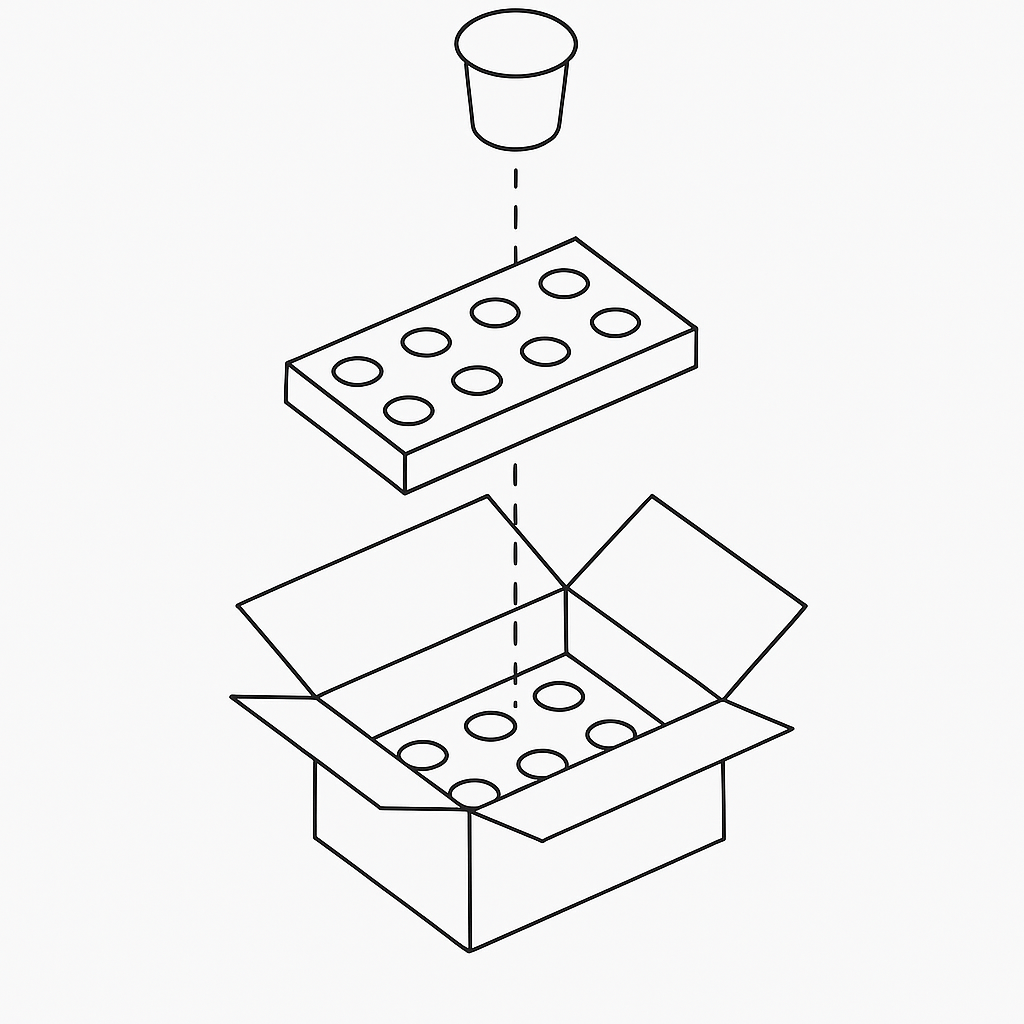
Proof of concept
Practical Considerations for Either Option
Regardless of which path you take, a few fundamentals apply:
1. Portion Size & Use Instructions
Make it crystal clear how much water or milk to mix with each sample. Most consumers don’t want to pull out a scale.
Include:
Serving size (e.g., “30 g single serving”)
Mix instructions (“Mix with 8–10 oz of cold water or milk”)
Any special notes (“Best shaken, not stirred”)
2. Regulatory & Labeling
Here’s some watch outs:
Name and net weight
Supplement facts or nutrition facts panel
Ingredient list
Allergen statements
Brand name and contact info
You can either print this on each inner pack or handle some of it at the outer carton level, depending on how you structure the product.
3. Sustainability Choices
There’s always a balance between barrier performance and recyclability.
Use recyclable or FSC-certified paperboard where possible
Consider thinner plastic formats for cups or trays
Clearly communicate any sustainability efforts on-pack (“Carton is recyclable,” etc.)
4. Where This Lives in Your Business
Think about how you’ll integrate samplers into your strategy:
DTC: As a low-cost entry product or add-on at checkout
Retail: On-shelf next to full-size tubs, or as seasonal special displays
Subscriptions: Send sampler kits to existing subscribers when you launch new flavors to drive upsell and cross-sell
So… Which Option Should You Choose?
Here’s a simple rule of thumb:
Choose Option 1 (Foil Pouch Carton) if you want:
The most practical, scalable, cost-effective solution
A format that’s easy to ship and easy to produce with existing co-packers
Something you can roll out quickly across your full flavor lineup
Choose Option 2 (Queen Anne–Style Cup Kit) if you want:
A premium, giftable unboxing experience
A “wow” factor for influencers, launches, or limited editions
A sampler that feels more like a curated tasting box than a utility pack
Both solve the original problem my girlfriend pointed out:
“I just want to try the flavors without buying a whole tub.”
If you’re a protein brand, that sentence should be a huge opportunity signal.
Design a sampler that lowers the barrier, respects your customer’s budget, and shows off what makes your flavors special — and you’ll not only earn more first-time buyers, you’ll build a lot more trust along the way.
